



















How does digital marketing differ from traditional marketing?
Digital vs. traditional marketing side by side: targeting, cost, speed and measurement, why digital is now a must in Jordan and the GCC, and how to shift your budget step by step.
- Published
- Updated
- Reading time
- 7 min

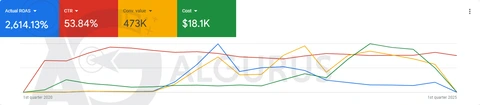
26×ROAS on Google Search, luxury jewelry (industry 4–6×)
Traditional marketing broadcasts one message to a broad audience through offline channels such as billboards, print, radio and TV. Digital marketing reaches chosen people through search, social media, websites and messaging, lets you change campaigns at any time and measures leads, sales and return on ad spend. For businesses in Jordan and the GCC, digital should be the primary engine, with traditional channels in a supporting role.
- The real difference is control and feedback: who sees the message, how fast you can change it and what you can measure.
- Digital can start small and scale with results; traditional usually needs a large fixed booking.
- Every sale can be tracked: Google Search ads for a jewelry brand returned 26× their cost (industry 4–6×).
- Shift step by step: audit, pilot, scale, with tracking from day one.
- 26×ROAS on Google Search for a luxury jewelry brand in Jordan (industry 4–6×)
- $3.55cost per purchase in a Black Friday Meta campaign (industry $15–25)
- $28M+ad spend AlGurus has managed and tracked since 2018
- 120+brands across Jordan, the Gulf and beyond
In this guide9
The marketing shift is not coming; it is already here. Customers in Amman, Riyadh and Dubai now discover brands on Instagram, compare them on Google, ask about them on WhatsApp and buy from them online, often in the same afternoon. Traditional channels such as billboards, print, radio and TV still have a place, but they cannot match digital marketing’s precision, flexibility or the ability to measure what every dinar returns. That is why digital marketing is a must for businesses in Jordan and the GCC competing in 2026.
This guide compares the two approaches side by side, explains why digital has become the primary engine for growth, where traditional marketing still helps, and how to move your budget step by step. For a fuller introduction to the channels, see our guide to what digital marketing is and why it matters in Jordan.
How Does Digital Marketing Differ From Traditional Marketing?
Traditional marketing broadcasts one message to a broad audience through offline channels: billboards, newspapers, magazines, radio, TV, flyers and events. Digital marketing reaches people through online channels, such as search engines, social media, websites, email and messaging apps, and lets you choose who sees the message, change it at any time and measure the result.
The difference is not only where the ad appears. It is how much control and feedback you get:
| Factor | Traditional marketing | Digital marketing |
|---|---|---|
| Targeting | Broad: everyone who passes, reads or tunes in | Precise: by location, interests, behaviour and search intent |
| Cost to start | Usually a large fixed booking | Can start small and scale with results |
| Campaign setup | Weeks (design, printing, booking) | Hours to days |
| Changing the message | Costly or impossible once booked | Any time, within minutes |
| Measurement | Estimates, surveys, “brand lift” | Clicks, leads, sales and return on ad spend |
| Interaction | One-way | Two-way: comments, messages, reviews |
5 Reasons Why Digital Marketing Is a Must
- Precision targeting. A billboard shows the same message to everyone driving past. Digital lets you reach, for example, parents in Amman interested in premium baby products, or people searching right now for a dentist in Khalda. Less of the budget goes to people who will never buy.
- Real-time optimization. With TV or print you wait weeks or months for any sense of performance. With digital you can pause a weak Instagram ad within minutes, move budget to the ad that works and test a new offer the same day, reacting to market shifts instantly.
- Measurable ROI. Traditional campaigns are judged on estimates. Digital campaigns can be tracked from the first click to the purchase, so you can prove marketing’s contribution to revenue. For a luxury jewelry brand in Jordan, Google Search ads returned 26 times their cost (26× ROAS) against a typical industry range of 4–6×; that kind of number is only possible because every sale is tracked.
- A low entry cost that scales. You do not need a large media booking to begin. A small business can start with a modest daily budget, learn what works and grow spending only as results come in. Our guide to the best platform for a small budget shows where to start.
- Assets that keep working. A billboard stops working the day the booking ends. A well-ranked website, useful content and a loyal social audience keep bringing customers month after month. SEO in particular compounds: for one luxury watches store it brought 86K organic clicks in 16 months.
Traditional marketing tells people about you. Digital marketing lets you see who listened, who replied and who bought.
Digital vs. Traditional: The Cost Breakdown
Comparing costs fairly means looking at what you get for the money, not just the price of a booking. Three questions make the comparison clear:
- What is the minimum to start? Traditional channels usually need a fixed booking for a period of time, plus production. Digital platforms let you set a daily budget and stop whenever you want.
- Who will see it? With traditional media you pay for everyone the message reaches, interested or not. With digital you pay mainly for the people you chose, and on Google often only when someone clicks.
- What will you know afterwards? Traditional campaigns leave you with estimates. Digital campaigns show cost per lead, cost per purchase and return on ad spend, so the next campaign is better than the last.
The verdict: for budget-conscious businesses, especially SMEs, digital marketing is the more efficient place for most of the budget, because every dinar can be directed, measured and improved. Our Google Ads cost guide for Jordan shows what real budgets look like.
Why digital marketing is non-negotiable in Jordan and the GCC
- Mobile first: most people in Jordan and the Gulf go online mainly on their smartphones, and that is where they discover, compare and contact businesses.
- The Arabic search opportunity: many local businesses still do not optimize their sites for Arabic searches, so brands that publish clear Arabic content and run Arabic and bilingual SEO can win visibility competitors are leaving on the table.
- Ecommerce growth: online shopping keeps growing across the region, especially in Saudi Arabia and the UAE, and Jordanian brands can now sell into those markets through their own stores and ads.
- AI search: customers increasingly ask Google’s AI Overviews and assistants like ChatGPT for recommendations. Being visible there depends on a strong digital presence; GEO is how brands earn those mentions.
The conclusion: digital marketing is not just helpful in this region; it is a must for staying relevant.
Where Traditional Marketing Still Helps
Digital being a must does not mean traditional is useless. It works best as a supplement to a digital core:
- Local presence: a billboard near your branch or signage in a busy area builds recognition with people who pass every day.
- Events and sponsorships: exhibitions, launches and community events create real-world trust and content you can reuse online.
- Brand recall: radio or outdoor ads can support a large launch, especially when they push people to search for you, scan a QR code or message you on WhatsApp, which turns an offline ad into something you can measure.
The best results come when offline activity drives people into digital channels where you can follow up, retarget and measure.
3 Warning Signs You Are Ignoring This Must-Have Strategy
- Competitors own Google for “[your service] Jordan”When people search for what you offer, your competitors appear and you do not.
- Much of your budget gives results you cannot measureYou cannot say how many customers your last print, radio or billboard campaign brought in.
- Customers mention seeing competitors onlineThey found competitors on Instagram, Google or TikTok, and never saw you there.
Transition Roadmap: How to Move to Digital Step by Step
- Audit. List your current marketing spend and identify the traditional channels with the lowest or least measurable return.
- Pilot. Move a portion of that budget, for example around 30%, into Meta Ads or Google Ads, with conversion tracking set up from day one. Run it long enough to learn your real cost per lead or sale.
- Scale. Put more budget behind what works, and reinvest digital profits into long-term assets such as SEO and content that keep bringing customers without paying for every click.
Along the way, avoid the most common traps: no tracking, too many platforms at once and judging campaigns on likes instead of sales. Our guide to common digital marketing mistakes covers them in detail.
Why Wait? Make Digital Your Primary Growth Engine
Digital marketing gives you what traditional channels cannot: precise targeting, the freedom to change course quickly and clear proof of what your budget returns. For businesses in Jordan and the GCC it is no longer optional; it is the primary engine, with traditional channels in a supporting role.
AlGurus is a digital marketing agency in Amman, a Google Premier Partner and Meta Business Partner, with 13+ years of experience and $28M+ in ad spend managed for 120+ brands. If you would like help planning the move, we offer a consultation: we review your current marketing mix and suggest where to start, which you are free to use with any team. Contact AlGurus, explore our digital marketing services, or read more in the digital marketing basics guides.
Mohammad Khalil Founder of AlGurus
13+ years in digital marketing, $28M+ in managed ad spend and 120+ brands across Jordan and the Gulf. He leads AlGurus, a Google Premier Partner (top 3% worldwide), Meta Business Partner and Shopify Partner, from Amman.
Frequently asked questions
What is the main difference between digital and traditional marketing?
Traditional marketing broadcasts one message to everyone through offline channels. Digital marketing reaches chosen audiences online, can be changed at any time and is measured in clicks, leads, sales and return on ad spend.
Can traditional marketing still work?
Yes, as a supplement. Billboards near a branch, events and radio can build recognition, especially when they push people to search, scan a QR code or message you on WhatsApp. Digital should be the primary engine.
Is digital marketing cheaper than traditional marketing?
It usually costs less to start, because you can set a small daily budget and stop at any time. More importantly, spend can be directed at chosen audiences and measured, so budget moves to what works instead of being spent on estimates.
Is the shift to digital urgent for established businesses?
Yes. Customers in Jordan and the GCC now discover and compare brands online first. An established business that is absent from Google, social media and AI answers is leaving those customers to competitors who are there.
How should a business move its budget from traditional to digital?
In three steps: audit current spend to find the least measurable channels; pilot by moving a portion, for example around 30%, into Meta or Google Ads with conversion tracking; then scale what works and reinvest in SEO and content.
Where should a small business start with digital marketing?
With one channel that matches how customers find you: Google Search if they search for what you sell, Meta if they need to see it. Our guide to the best platform for a small budget walks through the choice.

