
















The Ultimate Guide for Meta Ads in 2026: Mastering AI, Commerce, and Conversation
AI-powered targeting, immersive shopping and conversational commerce: what changed in Meta advertising, what you still control, and how to prepare your account.
- Published
- Updated
- Reading time
- 8 min

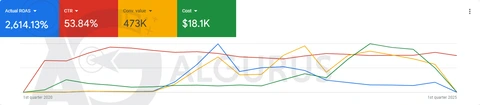
17.6×ROAS, Black Friday Meta campaign, luxury jewelry
In 2026, Meta Ads are shaped by three forces: AI that decides who sees each ad (Advantage+ and the Andromeda delivery engine), immersive shopping formats such as catalog and collection ads, and conversational commerce through WhatsApp, Messenger and Instagram Direct. Your job has moved from hand-picking audiences to feeding Meta clean data, distinct creative and a fast path to purchase.
- Advantage+ is now the default: Meta’s AI picks audiences, placements and budget split within your guardrails.
- Creative is the new targeting: distinct concepts beat dozens of near-identical variations.
- In Jordan and the Gulf, WhatsApp is a checkout: answer fast and feed chat sales back to Meta.
- Clean tracking first: Pixel plus Conversions API with purchase values lets the AI optimize for revenue.
- 17.6×ROAS, Black Friday Meta campaign for a luxury jewelry brand
- $3.55cost per purchase in that campaign (industry: $15–25)
- 23×ROAS for a luxury sneakers brand: $46.7K revenue from $2K spend
- $1.19cost per lead, Meta lead ads for a financial services brand (6,926 leads)
In this guide10
Meta advertising looks very different in 2026 from the way it looked even three years ago. The strategies that worked when you could hand-build a narrow interest audience and run one ad for a month now produce average results at best. Three forces have reshaped the platform: artificial intelligence that decides who sees each ad, shopping experiences that shorten the path from scroll to purchase, and messaging apps that have turned into sales channels. For businesses in Jordan and the Gulf, understanding these shifts is the difference between paying for reach and paying for revenue.
This guide breaks the three pillars down into plain language and practical steps: what changed, what Meta’s systems now do on your behalf, what you still control, and how to prepare your account. It is written from the Meta Ads accounts our team runs as a Meta Business Partner, for sales, lead and messaging campaigns across Jordan, Saudi Arabia and the wider region.
What Has Changed in Meta Ads for 2026?
In short: Meta’s AI now makes most of the delivery decisions, and the advertiser’s job has moved from targeting people to feeding the system the right signals, creative and offers. Three trends define the year:
- AI-powered ad targeting: Advantage+ campaigns choose audiences, placements and budget allocation automatically, and a new delivery engine reads the ad itself to decide who should see it.
- Immersive shopping experiences: catalog ads, collection formats and try-on features let people explore products inside the ad before they reach your website.
- Conversational commerce: click-to-WhatsApp, Messenger and Instagram Direct ads turn a chat into the checkout, increasingly with AI handling the first replies.
None of this removes the need for strategy. It changes where the strategy sits. The rest of this guide takes each pillar in turn.
Pillar 1: How Does AI-Powered Ad Targeting Work in 2026?
The era of manual audience building is closing. Success is no longer about who can stack the most detailed interests, but about who can guide and feed Meta’s AI with the right signals and creative assets.
Advantage+ Is Now the Default, Not an Option
Advantage+ is Meta’s family of automated campaign tools. Advantage+ sales campaigns (formerly Advantage+ shopping), Advantage+ audience and Advantage+ placements manage audience selection, budget allocation, creative rotation and placement across Facebook, Instagram, Messenger and the Audience Network. Meta has made these settings the starting point when you create most campaigns, and in our accounts they usually outperform heavily restricted manual setups once tracking is clean.
Underneath sits Meta Andromeda, the retrieval engine that shortlists which ads are considered for each person. It reads the content of your creative as a targeting signal, which is why varied, distinct creative now does much of the work interest targeting used to do.
Generative AI for Creative Variation
Ads Manager now includes generative tools that create text variations, expand images to fit Stories and Reels, generate backgrounds and turn still images into short videos. Used well, they let a small team test more angles for different segments, for example one message for young professionals in Amman and another for families in Irbid. Used carelessly, they produce dozens of near-identical ads that the system treats as one idea. We use them to adapt a strong concept, not to replace one.
Optimizing for Customer Value, Not Just Conversions
Meta’s systems can optimize beyond a single conversion event. Value optimization and value rules let the algorithm prioritize people likely to spend more, and to bid more for the customers that matter most to you, such as high-value cities or repeat buyers. This only works when purchase values flow back to Meta accurately, which is why tracking comes first in our readiness checklist below.
| Meta’s AI decides | You still control |
|---|---|
| Who sees each ad, within your broad audience | The objective and the conversion event you optimize for |
| Which placement and format each ad runs in | The creative: concepts, hooks, offers and language |
| How budget moves between ads and audiences | Guardrails: locations, existing-customer caps, exclusions |
| Bids within the auction | The quality of the data you send: Pixel, Conversions API, purchase values |
Pillar 2: What Are Immersive Shopping Experiences on Meta?
The path to purchase is getting shorter. Immersive shopping experiences on Meta blur the line between browsing and buying: instead of an ad that only links to a website, the ad itself becomes a small shop window. For businesses, this means moving from advertising products to placing them inside the user’s feed in a way that invites exploration.
- Catalog and collection ads: Advantage+ catalog ads show each person the products they are most likely to want, pulled from your product feed. Collection and Instant Experience formats open a full-screen, fast-loading product showcase. For fashion, ecommerce, beauty and home decor brands, these are the workhorses of a sales account.
- Augmented reality try-on: AR effects let people “try on” sunglasses, cosmetics or watches with the camera. They work best for categories where fit or look is the main hesitation. They take extra production, so we test them where hesitation is the real barrier rather than as a novelty.
- Live and video selling: Meta closed its dedicated Live Shopping feature on Facebook in 2022. Live video still sells, especially on Instagram, but for brands in Jordan the practical version is a live session or Reels series with orders taken through DM or WhatsApp.
- Virtual storefronts: the metaverse storefront idea that was popular a few years ago has not become a mainstream advertising channel. In 2026 we would not move budget there; Reels, Stories and catalog ads are where the buyers are.
One practical note for the region: for most businesses in Jordan and the Gulf, the purchase still completes on your own website, on a Shopify or Salla store, or in a chat. Meta’s role is to make the journey from ad to product page as short and convincing as possible, so page speed and a clean product feed matter as much as the ad.
Pillar 3: How Is Conversational Commerce Changing Meta Ads?
Meta is turning WhatsApp, Messenger and Instagram Direct from customer service channels into sales engines. In Jordan this is not a trend to wait for: many customers already prefer to ask a question on WhatsApp before they buy, especially for higher-priced products and services. Conversational commerce strategies guide a person from a first question to a completed order without leaving the chat.
- Click-to-message adStart the conversationA Reels, Stories or Feed ad with a Send message button opens WhatsApp, Messenger or Instagram Direct with a pre-filled question.
- Automated first replyQualify and answer fastSaved replies or an AI assistant answer common questions, share the catalog, and ask the two or three questions that qualify a buyer.
- Human closeConvert high-value chatsComplex or high-value conversations are handed to a person who can quote, reassure and take the order.
- Opt-in follow-upBring buyers backWith consent, the WhatsApp Business Platform sends restock alerts, reminders and offers to past customers.
- AI-assisted chat: Meta has been rolling out AI business assistants for WhatsApp and Messenger, with availability that varies by market and language. Whether you use Meta’s tools or a third-party chatbot, the principle is the same: automate the routine questions, never the relationship.
- Personalized broadcast messaging: through the WhatsApp Business Platform you can send product recommendations, abandoned-cart reminders and offers to customers who opted in. Marketing messages are paid per message and need explicit consent, so keep them relevant and infrequent.
- Seamless handoff to people: the best flows escalate to a human the moment a customer asks something complex or is ready to buy a high-value item. A fast human reply often decides the sale.
The weak point of message campaigns is measurement: a sale closed in WhatsApp is invisible to Meta unless you record it. Logging chat sales and sending them back as offline or Conversions API events lets the algorithm learn which chats turn into buyers, not just which ads start chats. Our WhatsApp Ads service page explains how we set this up.
How Do You Prepare Your Meta Ads Account for 2026?
The groundwork for these trends is laid in the account you run today. Before you change campaign types, check these six foundations.
- Pixel plus Conversions API, deduplicatedServer-side events recover sales the browser misses, and purchase values let Meta optimize for value.
- A steady flow of distinct creativeNew concepts, hooks and formats every month, in Arabic and English where your buyers use both.
- A clean product catalogAccurate titles, prices, availability and images, synced from your store, so catalog ads show the right items.
- A simple campaign structureFewer, larger campaigns give the AI more data than many small ones competing for the same people.
- Fast replies on WhatsApp and InstagramMessage ads only pay off if someone answers in minutes, not hours, including evenings.
- Chat and offline sales fed back to MetaRecord sales closed in chat or by phone so the system learns which conversations become customers.
Notice that none of these items is a secret setting. Results like the ones at the top of this page come from the basics done consistently: the right objective, clean data and creative that is tested every month. For a deeper look at the delivery engine behind these changes, read What is Meta Andromeda?; for how to judge an agency’s approach, see our guide to choosing a Meta Ads partner in Amman.
Your 2026 Strategy Starts Today
AI-powered targeting, immersive shopping and conversational commerce are not distant concepts. They are how Meta delivers ads now, and advertisers who adapt their structure, creative and tracking early benefit first. The businesses that struggle are usually not the ones with small budgets, but the ones still running 2021 playbooks: narrow interests, a single ad and reports that stop at clicks.
If you would like a second opinion, AlGurus offers a Meta Ads 2026 readiness audit. We review your current campaigns against the three pillars, check your tracking and creative pipeline, and give you a clear plan you can use with any team. Contact AlGurus to request it, or read more about our Meta Ads management. More guides on Facebook, Instagram and paid social are collected in our Meta & social ads topic.
Mohammad Khalil Founder of AlGurus
13+ years in digital marketing, $28M+ in managed ad spend and 120+ brands across Jordan and the Gulf. He leads AlGurus, a Google Premier Partner (top 3% worldwide), Meta Business Partner and Shopify Partner, from Amman.
Frequently asked questions
What is the biggest change in Meta Ads in 2026?
AI now makes most delivery decisions. Advantage+ campaigns choose audiences, placements and budget allocation, and the Andromeda engine uses your creative as a targeting signal. Advertisers win by supplying clean conversion data and a steady flow of distinct creative.
Should I still use detailed interest targeting on Meta?
Use it sparingly. In most of our accounts a broad audience with strong, varied creative and good tracking outperforms narrow interest stacks. Keep manual controls for real business limits, such as delivery areas or excluding existing customers.
What are Advantage+ sales campaigns?
They are Meta’s automated campaigns for online sales, previously called Advantage+ shopping campaigns. They manage audience, placement, budget and creative rotation together, and work best with a deduplicated Pixel and Conversions API setup and a healthy product catalog.
Do click-to-WhatsApp ads work in Jordan?
Yes, especially for higher-priced products and services where customers want to ask a question before they buy. They pay off when someone replies within minutes and when sales closed in chat are recorded and sent back to Meta.
Are AR try-on and virtual storefronts worth it in 2026?
AR try-on can help in categories where look or fit is the main hesitation, such as eyewear, cosmetics and watches. Virtual storefronts have not become a mainstream channel, so we keep budget on Reels, Stories and catalog ads.
What results can a well-built Meta account achieve?
It depends on the offer, market and budget. As reference points, AlGurus ran a Black Friday Meta campaign for a luxury jewelry brand at 17.6× ROAS and $3.55 per purchase (industry $15–25), and lead ads for a financial services brand at $1.19 per lead.

